
Ticks are most active in the late spring and early summer.
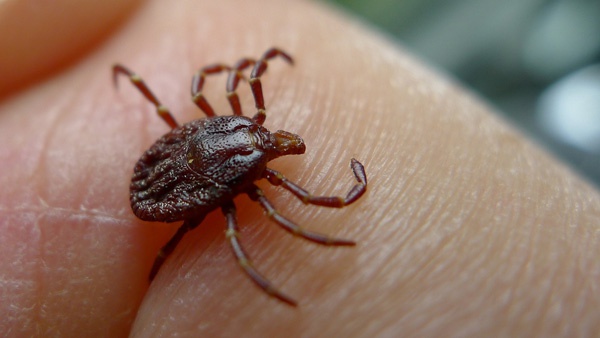
Photo by John Tann, Flickr.
(Indianapolis, Ind.) – Pesky bugs are a part of life in the summertime in Indiana, but they sometimes bring risks.
Ticks in particular are catching the attention of the Indiana State Department of Health. Not technically an insect, the arachnids are capable of spreading bacterial diseases, particularly Lyme disease, Rocky Mountain spotted fever, and ehrlichiosis.
Found in grassy and wooded areas, ticks are most active in the late spring and early summer. Recent field sampling by the ISDH has detected that ticks are already active this year.
“This is the time of year when we start to see the risk for tick-borne diseases increase,” said State Public Health Veterinarian Jennifer Brown, D.V.M., M.P.H. “The best way to protect yourself and your family is to prevent tick bites and conduct frequent tick checks during and after outdoor activities, whether you’re in the woods or in your own backyard.”
Last year, Indiana saw over 250 cases of tick borne illness. Symptoms of tick borne-illnesses can often look like the flu, with body aches, fevers and headaches. Anyone who notices a rash after being outdoors should seek medical attention immediately.
Once indoors, people should thoroughly check for ticks on clothing, gear, pets and skin. Tumbling clothes in the dryer on high heat for 30 minutes will kill ticks, and showering can help remove any unattached ticks.
If you find one, on you or a friend, use tweezers to grasp the tick close to the skin and then pull out. Wash the bite area thoroughly and discard the tick by submerging it in alcohol or placing it in a sealed bag, container, or tape.
“Ticks usually need to be attached for several hours to a couple of days before they can transmit disease, so quickly finding and removing a tick can help keep you safe from disease,” Brown said.
Other suggested ways to reduce the likelihood of a tick bite from the ISDH:
- Wearing a light-colored, long-sleeved shirt and light-colored pants, with the shirt tucked in at the waist and the pants tucked into socks, if they will be in grassy or wooded areas.
- Treating clothing and outdoor gear with 0.5% permethrin, which is an insect repellent specifically designed for this purpose (permethrin should NOT be used on bare skin)
- Using EPA-registered insect repellents with active ingredients such as DEET, picaridin, IR3535, oil of lemon eucalyptus (OLE), para-menthane-diol (PMD) or 2-undecanone
- Treating their pets for ticks
 Carson Hughes Foundation Announces Physical Location in Osgood
 Rep. Houchin Introduces 16 & Up Social Media Act
 Routine Inspection of Brent Spence Bridge Underway
 Special Olympics Partners with Tidal Wave Car Wash for Annual Charity Day
 NKY Woman Sustains Fatal Injuries in Head-on Crash
 Early Morning Pursuit Ends with PIT Maneuver













Comments
Add a comment