Discovery Is at The Heart of the Archaeological Research Institute
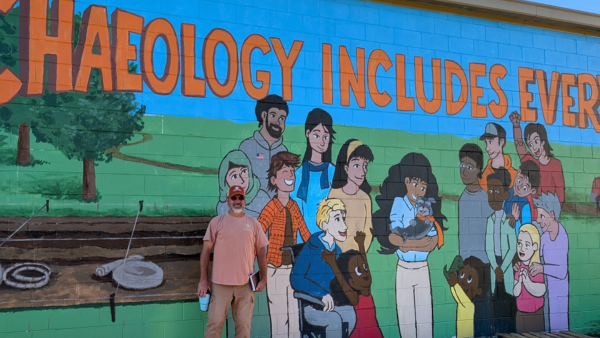
(Lawrenceburg, Ind.) - In Lawrenceburg, the Archaeological Research Institute is uncovering the lives of Indigenous people who called this region home and inviting the public to help bring their stories to life.
Imagine walking across an ordinary field in southeastern Indiana, unaware that beneath your feet lie traces of homes, tools, meals and everyday moments from a community that lived there a thousand or even 2,000 years ago.
A small fragment of pottery, a discarded tool or a shell buried in the soil may seem insignificant. But to archaeologists, each discovery offers a clue to the lives of people who came before us.
At the Archaeological Research Institute (ARI) in Lawrenceburg, uncovering those stories is more than a scientific pursuit. It is an opportunity to connect people today with the Indigenous communities who lived, worked and raised their families in this region long before European settlement. And the public is invited to take part.
Think about how our own family stories become more meaningful when we see the places where those stories happened.
For example, my mother grew up poor in downtown Cincinnati. She told me stories of her childhood – Saturday was laundry day and in the winter they hung the clothes in the attic to dry; after the laundry was done she and her sisters were sent to Findlay Market to get the ends of lunch meat and the half-price bread that merchants were anxious to sell before being closed on Sunday. She told of walking to school at St Francis. And of getting in a rowboat to escape the flood of 1937.
Years later, I found the house my mother grew up in and saw the third floor attic window. I saw how far she walked to Findlay Market and the old school, and her memories came into sharper focus for me. I saw the Ohio River differently when I imagined its floodwaters rising through the streets.
Now imagine trying to reconstruct a family's story when the people lived hundreds or thousands of years ago and no written records or living relatives remain to tell it. That is where archaeology comes in.
Archaeologists cannot know every detail behind a discovery, but artifacts allow them to develop informed interpretations of how people lived, what they made, what they ate and how they connected with others.
ARI is one of only 10 Public Archaeology Organizations in the United States. Its mission combines archaeological research and preservation with hands-on public participation and education.
One important focus of ARI is the Guard Village site, a settlement inhabited between approximately A.D. 1000 and 1250. Its residents farmed, fished and hunted, making use of the resources available in the Ohio River Valley.
Artifacts recovered at the site, along with animal remains and minerals originating in distant regions, including the Chicago area, Michigan and Wyoming, provide evidence that people connected well beyond the immediate area.
Such discoveries help researchers understand how ancient societies used the region's rivers and tributaries as routes for travel, food, and communication long before modern roads connected southeastern Indiana's towns.
During a tour at the Guard Village site, Archaeology Coordinator Louis Herzner explained how even ordinary recovered objects can offer insights when looked at from a human perspective. The layers of soil preserve the details of daily routines as well as evidence of major events like floods.
“Maybe a mother was tired of hearing her child blow on the flute so she tossed it into a rubbish pit and the dirt and stones preserved it for us to find a thousand years later,” Herzner said. Pottery fragments with burnt edges, he added, may help identify places where cooking took place and other objects are clues to how they used weapons.
ARI's Landscape Archaeologists study seeds found during digs and work to restore native plants and eradicate invasive species, connecting archaeological research with conservation today.
You don't have to be an archaeologist to help uncover the past. Depending on the program, visitors can participate in fieldwork, clean and sort artifacts in the lab, explore native plants or try throwing a spear with an atlatl, an ancient hunting tool. Tours, talks, field schools and family events offer opportunities for all ages to learn by doing. Twelve hundred students explored with ARI this past year.
ARI also brings archaeology into the community through educational podcasts, school and library presentations, and partnerships with property owners and local officials to preserve historic sites. Its work with Indigenous descendant communities and Tribal Historic Preservation Officers helps ensure that Native perspectives remain central to interpreting the past.
No excavation can recover every name, memory or spoken story lost through the centuries. But the evidence remaining in the ground can help restore pieces of that history and deepen our understanding of the people who once called this region home.
Their ingenuity, adaptability and connection to the landscape are part of southeastern Indiana's story, too.
For information about tours, volunteer opportunities and upcoming activities, visit the Archaeological Research Institute's Facebook page.
An upcoming opportunity is the Third Annual Pumpkin STEM Festival at Carriage House Farm, 2872 Lawrenceburg Road, North Bend, Ohio on Saturday, November 7th from 11am -6 pm. The free, family-friendly event combines hands-on science, ancient technology, food and music, and fall festivities for a pumpkin-powered celebration of learning.
Whether you're fascinated by local history, curious about archaeology or simply looking for an unusual family outing, ARI offers a chance to discover that history is not always found in a book or behind museum glass. Sometimes, its most compelling stories are waiting just beneath our feet.
 Pence Sentenced in Sibling Shooting Death
 Switz. Co. Senior Selected for National Navy Option Scholarship
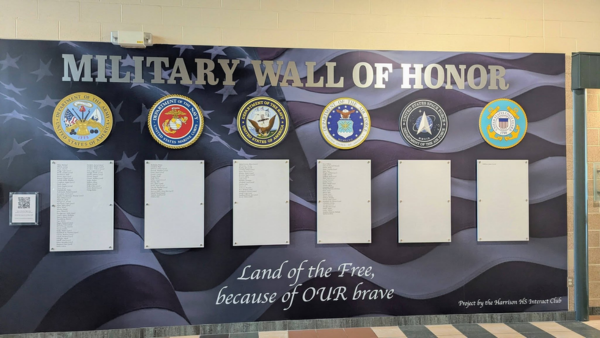 Military Wall of Honor Unveiled at Harrison High School Activity Center
 Grammy Winning Musician Continues Weekly Teaching at Canaan Community Academy
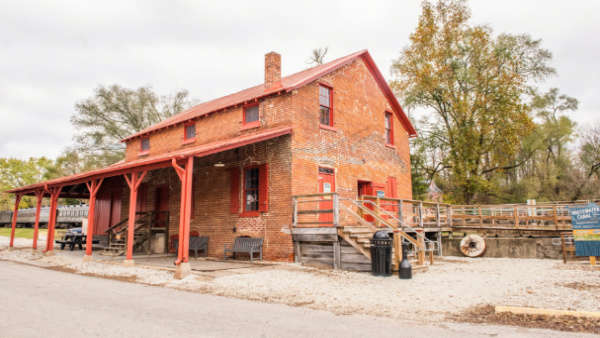 Whitewater Canal Gets Approval to Start Spending for Restoration Project
 Indiana Awards Nearly $110 Million for Local Road and Bridge Improvements