A Local Story Rooted In The Nation’s Earliest Years
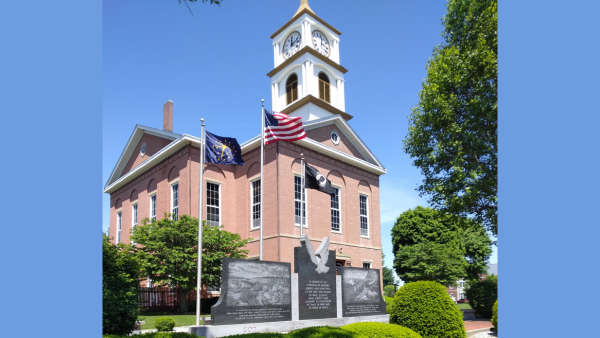
Photo by Cheryl Damon-Greiner.
(Versailles, Ind.) - When people think about the Declaration of Independence, they usually picture Philadelphia, powdered wigs, and famous names from the East Coast. They do not usually think about a small town in southeastern Indiana like Versailles. But in a very real way, places like Versailles are part of the Declaration’s long story too. Without the break from Britain, without the Revolutionary soldiers who fought to make that break stick, and without the new nation’s push to organize western lands, the growth of Indiana—and the eventual rise of Versailles—would have looked very different. Versailles might not exist at all.
Of course, Versailles itself is not 250 years old. But its story does trace back to the years right after American independence. When the Revolutionary War ended and the Treaty of Paris officially recognized the United States, the new nation had the opportunity to expand west of the Appalachians. A few years later came the Northwest Ordinance, which laid out how western territories could be settled and eventually become states. That helped pave the way for Indiana, Ohio, Illinois, Michigan, and Wisconsin—and, later on, for towns like Versailles.
When Indiana became a state in 1816, scattered settlements across the region quickly started becoming more organized. What had been rugged frontier land became places where people built communities for the next generations. After Ripley County was established in 1816, Versailles was chosen as the county seat in 1818. You can still see that part of the town’s history today. The courthouse square, older homes, bridges, and homesteads around Laughery Creek show how Versailles slowly took shape one step at a time. Trails became roads, and government buildings, businesses, schools, and churches followed.
Of course, that growth was not simple or painless. Settlement in Indiana came with conflict and major consequences for Native communities already living here. That history is part of the story too, and it should be remembered alongside the town’s development.
You can still trace that development through landmarks around Versailles. The Ripley County Courthouse, completed in 1864, remains at the center of town. Tyson Temple and the Busching Covered Bridge near Versailles State Park reflect how the community continued to grow through the 1800s and beyond. Even the local stories passed down over the years — about Gordon’s Leap, Morgan’s Raid, the Wolfman of Versailles, and the horrors of the Hanging Tree — show how deeply the past still lives here.
The river of history didn’t stop moving. As Versailles grew, local leaders and residents continued shaping the town in ways that still matter today. One of the best examples is James Tyson, better known locally as “Uncle Jim.” A Versailles native and early leader with Walgreens, Tyson used his success to invest back into his hometown. His support helped fund Tyson Temple, the library, the school auditorium, and other projects that strengthened the community and left a lasting mark on the town. The Tyson Fund still supports local organizations today.
Like many small towns, Versailles also saw changes in the mid to latter 1900s. The look of the Square shifted and declined. The courthouse square had been lined with grocery stores, drugstores, a bank, dress shops, a hardware store, a movie theater, a furniture store and The Courthouse Inn.
Versailles School was within walking distance of the Square. Students and teachers bought lunch and ran errands at the local shops. School events (ballgames, concerts, PTA nights) brought families downtown. The Square felt like the center of daily life, not just government.
But Versailles School closed after consolidation into South Ripley Schools and that changed the daily rhythm of downtown. When South Ripley opened miles away on Benham Road, all that foot-traffic vanished overnight. But the decline of the Square wasn’t because of the school move alone.
The earlier rerouting of US‑50 had a role – it redirected the lifeblood of the town. After realignment, traffic was guided around the town as part of a statewide effort to modernize major routes. The Square lost the economic momentum it had enjoyed since the 1800s. Then in the 1980s and 90s, shopping became an exercise in ‘mall walking’ instead of small town strolls. The courthouse square—the heart of Versailles—simply didn’t fit modern lifestyles.
Even so, the story did not end there. Over the past several years, residents, business owners, community groups, and local leaders have worked to bring new energy back to town through downtown improvements, preservation projects, support for the Pumpkin Show, holiday events on the square, connections with Versailles State Park, a music pavilion, new shops and restaurants, and renewed attention to historic landmarks.
It is a reminder that Versailles is not just a town with a long history. It is a town that continues building on that history.
While Versailles did not exist when the Declaration of Independence was signed, its story is still connected to that moment. Independence opened the door for the settlement and growth of places like Indiana and, eventually, communities like Versailles. In a town like this, that history still feels close to home and ever-changing.
 Whiskey City’s Liberty Theater Wins State Restoration Prize
 Minor Injuries in Small Aircraft Crash in Jefferson County
 Local, Regional Officials Hold Groundbreaking for Copper Creek Apartments in Greendale
 First Responders Respond to Water Rescue Call
 P.A.W.S. Rummage Sale: Find Hidden Gems & Help Furry Friends
 10th Annual Dillsboro Heritage Days Kicks Off This Weekend