Did you know the Underground Railroad went through Napoleon?
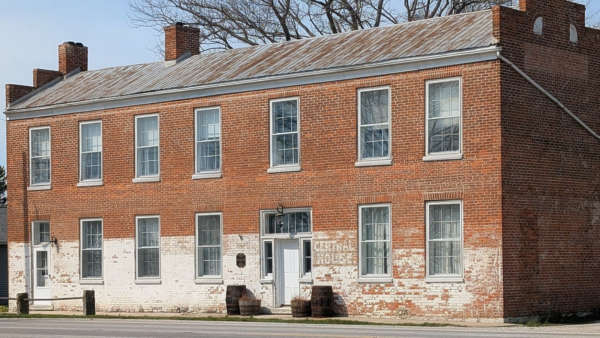
Central House. Photo by Cheryl Damon-Greiner.
(Napoleon, Ind.) - Tucked into the hills of Ripley County, the town of Napoleon, Indiana has always been small—but its history is anything but. Laid out in 1820, Napoleon was the second town established in Ripley County. From its beginning it remained a close-knit community rather than a booming town. By 1880, the population hovered around 250 residents, with just a few dozen homes clustered along dusty roads. Families lived close together, children attended one-room schoolhouses, and church bells were part of daily life. Most homes were simple log or frame structures, often paired with barns or outbuildings.
Napoleon was never a manufacturing center. Instead, it served travelers with its inns, taverns, livery stables, general store, and post office, welcoming those moving between the Ohio River and central Indiana. Early routes such as Berry’s Trace, cut through the wilderness around 1808, helped establish Napoleon as a stopping point. Later, Michigan Road and Brookville–Napoleon Road linked it to Indianapolis and Ohio River towns, making the village a familiar rest stop for wagons, stagecoaches, and horsemen.
By the 1830s, a few substantial brick buildings had been constructed—unusual in a town where most residents still lived in wooden or log homes. These structures, built with locally made bricks by itinerant brickmakers (skilled workers who traveled from town to town) featured thick walls and deep basements. Among them were the Central House, the Railroad Inn, and the Mendenhall–Barrickman Hotel. Their solid construction would soon serve a purpose far greater than comfort or commerce.
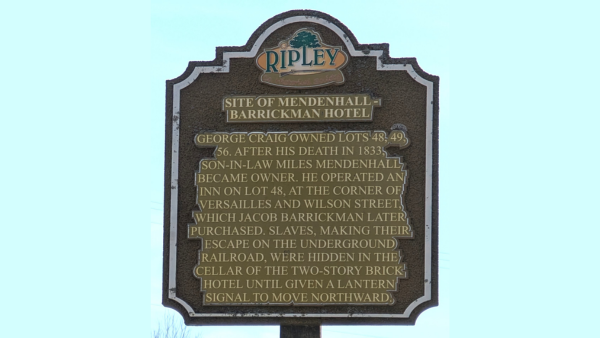
Historic plaque for Mendenhall-Barrickman Hotel.
Napoleon’s location made it something more than a travel stop. From roughly 1830 to 1860, the village became a quiet but critical link in the Underground Railroad. Freedom seekers—men, women, and children escaping slavery—passed through southeastern Indiana on their way north. Some traveled by night through woods and fields. Others hid in wagons, beneath hay or inside false compartments. In Napoleon, help came from ordinary people who did extraordinary things. ‘Conductors’ guided ‘travelers’, ‘station masters’ opened secret rooms in their homes and businesses, and neighbors provided food, clothing, and silence. The only communication between them was with code words, lantern lights, colored flags and designated songs sung as warnings.
At the heart of this effort stood the Railroad Inn. When ‘passengers’ arrived hidden in wagons to the livery across the street, they were led to a tunnel that ran beneath the street. The tunnel went into the basement of the Railroad Inn. There they would climb through an opening in the stone wall into a narrow hidden space, secure from the inn’s guests on the floor above them. They would be given some food and a chance to rest before going back through the tunnel to continue their journey. Sometimes they would be outside and travelling again if it were safe to do so. Other times, they continued through extensions of the tunnels that led to other safe houses in town to wait until any slave-hunters had moved on.
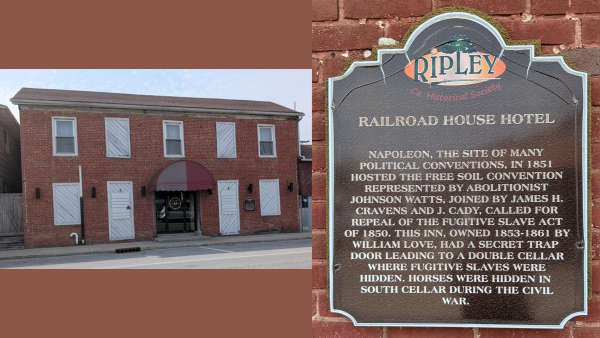
Railroad Inn and historic plaque.
Indiana’s location made the state a borderland between slavery in the South and freedom in the North. Towns like Napoleon became transition points, not final destinations. It’s buildings, homes and businesses played key roles in the portion of the Underground Railroad that ran through Indiana to Michigan and Canada. Indiana opposed slavery but also opposed Black equality. Freedom seekers were safer passing through rather than staying.
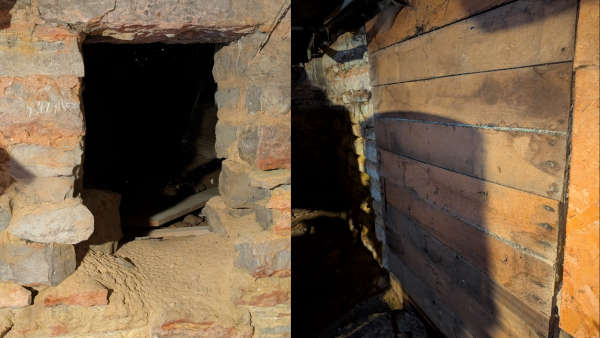
Hole in basement wall of Railroad Inn to secret hiding space (left) and tunnel entrance under the Railroad Inn.
Indiana was legally a free state, but helping someone escape slavery was a serious crime under federal law. The Fugitive Slave Acts of 1793 and 1850 allowed enslavers to pursue escapees into free states and imposed harsh penalties on anyone who offered aid. Fines, imprisonment, and violence were real risks. What happened in Napoleon was illegal, dangerous, and profoundly brave.
That courage became public in 1851, when the Free Soil Convention was held at the Railroad Inn. Local antislavery leaders gathered there to call for the repeal of the Fugitive Slave Act of 1850—the harshest of the federal slave laws. Holding such a meeting in a building already known for sheltering freedom seekers was an open act of defiance. It signaled that Napoleon’s quiet resistance was also a moral stand and confirmed a community willingness to accept risk to do what it believed was right.
The Underground Railroad endured in Napoleon not because of a single hero or building, but because an entire community chose to work quietly, together, not for a week or two but for decades, to help others find freedom. Today, Napoleon remains a small town. But its story—of courage, cooperation, and conscience—reminds us that some of the most important chapters in American history were written in the smallest of places.
 Aspiring Filmmakers Invited to Register for Indie Filmmaking Masterclass
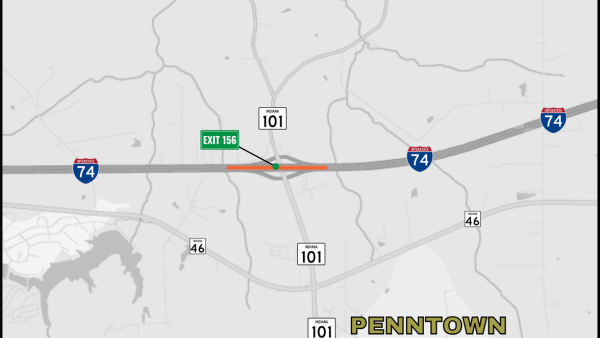 Bridge Painting Project Planned on State Road 101 over I-74 in Ripley County
 Rolling Roadblocks Today on Portion of Petersburg Road
 Rising Sun Regional Foundation Announces Critical Funding Changes and Grant Reductions
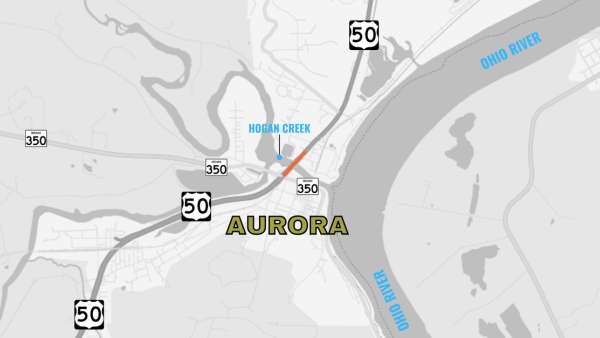 Bridge Painting Project Planned on U.S. 50 in Aurora
 Lawrenceburg Students Create Mural for Lawrenceburg Civic Park